


An Inordinate Amount
I can listen to Ta-Nehisi Coates talk about writing all day. When I saw this part of the video the first time, something clicked — and sharpened. "I always consider the entire process about failure," Ta-Nehisi Coates says in this 2013 Atlantic video. "And I think that's the reason why more people don't write."
An inordinate amount of failure is required, he says. He’s not talking about the bad days or the blocks, the first draft or the suffering, he’s talking about the process of doing it, of actually writing.
For teaching purposes, I streamlined what I’d take away: Iterative failure.
Writing is a process of iterative failure.
Imagine that, failure a non negotiable prerequisite to great writing. Wanna be a writer? You’re gonna have to make friends with failure. I already knew it from experience, but somehow watching him gave me permission to sum it up in a neat little — for their own good — grenade I can toss at clients and students when the moment arises.
They've usually got to stop and think about it. Then their expressions open. You mean I'm doing it "right," even though this sucks?
Damn straight. I throw away at least half of what I write. It was another guess until my research into other writers confirmed that, too.
To be clear, the "fail fast" model isn’t new; many of us have practiced it in business, design, or perhaps, if you're lucky, life.
Don't have the luxury of failure? Me neither, though I've failed at plenty anyway, and when I look back now I can say with certainty I don't wish I hadn't failed as much as I wish I'd done it faster and with more confidence.
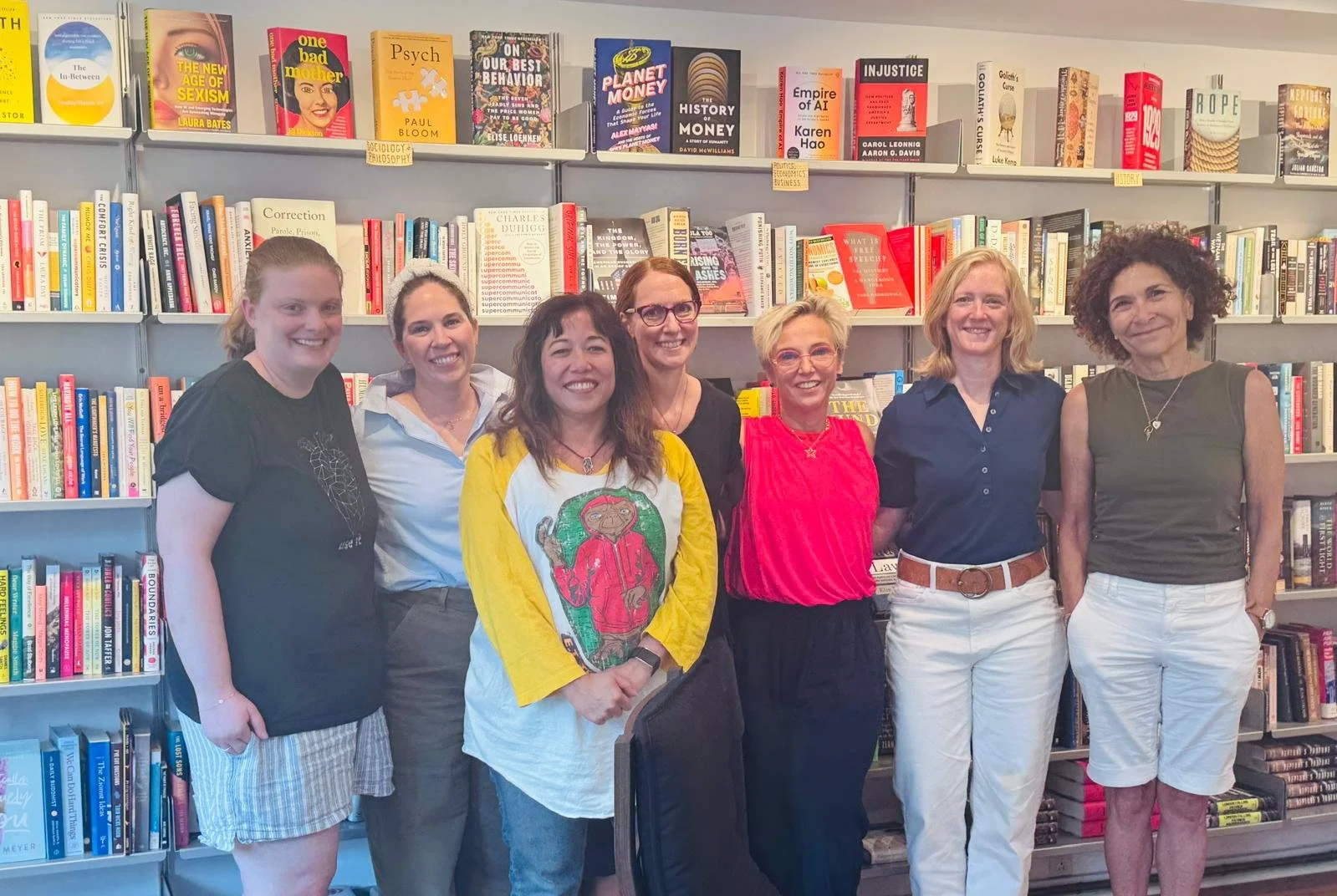
I'm still not good at the fast fail, or any fail really, but I continue to do it anyway—whoa, bye-bye 22-year marriage. Toward the end, I knew I'd been in a years-long divorce — but only when it was over did a Facebook memory throw me the data. A photo of me and my friend Sabina, making hearts at the camera, both of our smiles full throttle. What you, or anyone who laid their eyes on that photo, don't know is how she and I got together that day.
I’d called her from my driveway after my then husband delivered our marriage's death blow in one insincere sentence: "I wouldn't blame you if you had an affair."
“I’m headed to a rave in Brooklyn,” she said, “come with.”
From there, I spent nine years trying to save my marriage. Trying not to fail, in the slowest, most impossible way imaginable. I need the practice writing gives me to fail, get better at it, and dare I say, welcome it?
Meanwhile, I get the focus, the safety, for a time, to work out myself, with me. Editing gives me practice fixing mistakes, making better choices, and the reassurance that no matter what I have to blow up or let go of, whatever needs to die, I can handle it as long as I’m willing to grieve. And try something different.
From there, I can always make something beautiful in “The End.”
Besides, while I'm still drafting, I have the illusion of safety and control. And writing is such a great medium for that hard-to-find combination: safety + control + failure. You almost never get safety and control while you fail in real life.
How bout them apples?
We're in week three of Write Your Life as a Page-Turner, my six-week course at J. Anderson's Bookshop in Larchmont. Last week, I threw the grenade. This week, I get to watch what survives.
What am I seeing? writers aren't just revising first sentences anymore. Whole openings are coming down. What's going up in their place? More truth, more honesty, more of the actual person on the page.
Between week two and week three — something has given — it’s called interiority.
I'm already seeing better writing, and I suspect by Thursday, I'll see the writers. Wholly.
That's what iterative failure does when you let it. It doesn't just improve your drafts; it allows you to be more open out there in the world.
Toss the grenade into your own work. Who and what survives? What thrives? The practice gives you the space to find the parts of you that are still alive beyond the wreckage of your life.
Let one of those parts of you drop me a note at clementina@clementinacollective.com— maybe you write, still breathing in the subject line — and let me know wassup.
Always love hearing from you, Collective. Write on.